Sunday 11th January 2026
Happy New Year 🤍
I hope you had a gentle Christmas and welcomed the New Year in ways that felt nourishing, surrounded by people you love, or simply with the rest you’d been craving.
As January arrives with its familiar chorus of “new year, new me”, I’ve found myself thinking less about transformation and more about belonging. About how we step into new chapters, new versions of ourselves, while quietly wondering whether we truly fit there yet. How often we move through our own lives feeling slightly out of place, as if we’re performing rather than inhabiting them, even when, from the outside, everything looks settled.
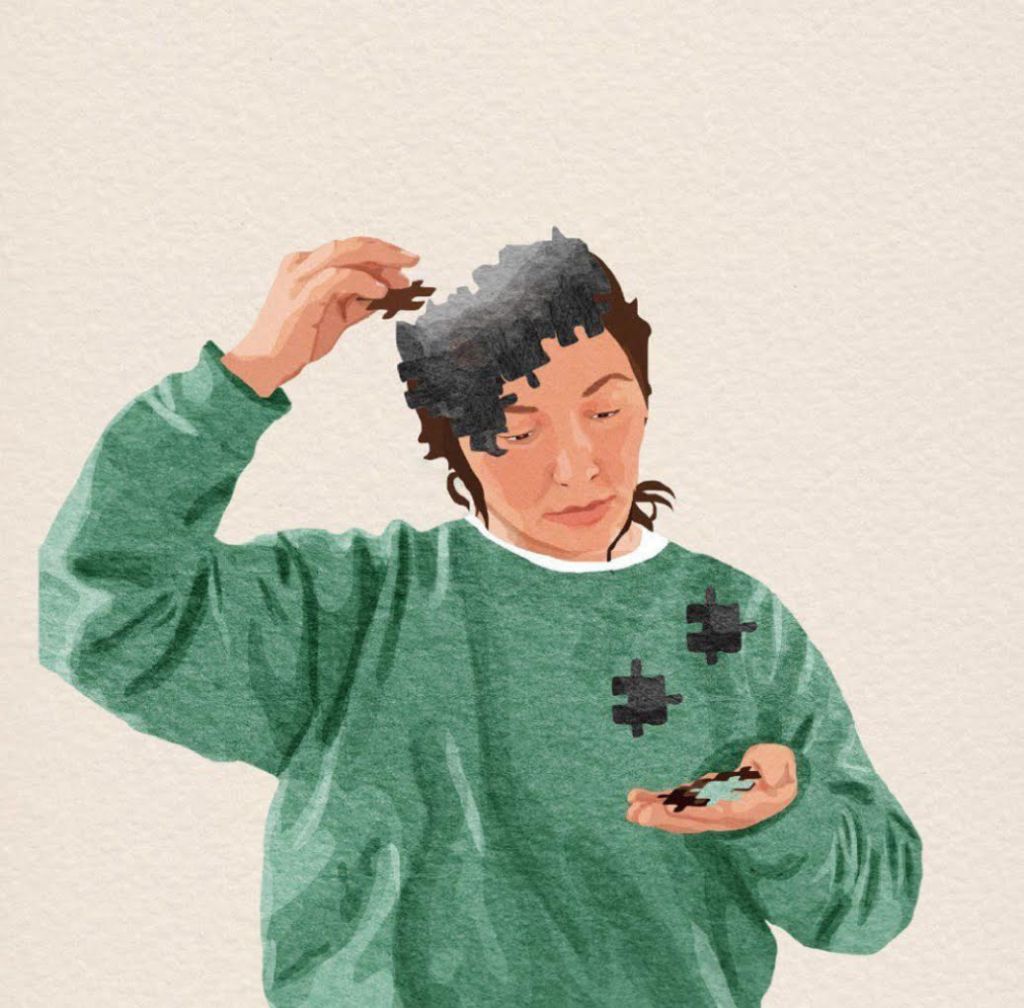
I don’t think imposter syndrome always looks the way we expect it to. Sometimes it isn’t loud or obvious; it’s quiet, subtle, and woven into the background of your thoughts. It’s the feeling that at any moment, someone might realise you’re not quite as capable, confident, or together as you appear to be. That somehow, you’re getting away with something.
Living with DPDR has shaped that feeling in ways I’m still trying to understand. When you don’t always feel present in your body or connected to the world around you, it’s easy to start questioning your own authenticity. If I don’t feel real all the time, am I being real? If I feel detached internally, does that mean I’m faking everything externally?
There are moments where my life looks full and functional from the outside; friendships, routines, plans, growth. Internally, I’m asking myself how I got here. Not because I don’t deserve it, but because it feels strange to exist in two places at once: one grounded in the world, and one still living inside my own head.
Imposter syndrome shows up for me less in obvious moments of self-doubt and more in quieter questions about worth and deserving. It’s the wondering whether I’ve earned the good things in my life, whether I’ve worked hard enough to justify them. When something comes easily to me, especially in areas where people say I have talent, I sometimes doubt the legitimacy of it. If it didn’t feel like a struggle, does it still count as effort?
I think being deeply self-aware can feed imposter syndrome. When you notice your thoughts, patterns, and emotional reactions constantly, it’s hard not to question yourself. Am I overthinking this? Am I reacting “normally”? Am I doing life the right way? Sometimes I think I know myself so well that I forget to trust myself.
Imposter syndrome also seems to appear when I’m growing. When I step into new versions of myself; stronger, more independent, more settled, a part of me still feels like I’m pretending. Like confidence is something I’m borrowing rather than something I’ve earned. But maybe that’s what growth feels like before it settles. Maybe it always feels a little uncomfortable before it feels natural. And I know I have made progress, heaps of it, and acknowledging that feels important.
There’s also something about modern life, and especially modern dating, that amplifies this feeling. The pressure to present a version of yourself that’s calm, secure, and unaffected can make any internal struggle feel like proof that you’re failing. When in reality, it’s proof that you’re human.
What I’m slowly learning is that imposter syndrome isn’t a sign that I don’t belong, it’s often a sign that I care. That I’m paying attention. That I’m stretching beyond what once felt familiar. Feeling like an imposter doesn’t mean I’m fraudulent; it means I’m evolving. I don’t think the goal is to completely eliminate imposter syndrome. I’m not sure that’s realistic. But I am learning to soften around it. To notice when it shows up without immediately believing everything it tells me. To remind myself that just because something feels unfamiliar doesn’t mean it’s undeserved.
If any of this resonates, it might be worth gently noticing how imposter syndrome shows up in your everyday life. Not to judge it or push it away, but simply to recognise it. Maybe it sounds like self-doubt after conversations, minimising your achievements, or the quiet fear of being “found out” when things are going well.
It can help to separate feelings from facts. Growth often feels unfamiliar before it feels deserved, and discomfort doesn’t mean you’re doing something wrong. Writing down what you’ve actually done, learned, or overcome can be grounding when your thoughts try to tell a different story. Rather than trying to eliminate imposter syndrome completely, it may be more realistic to change how you respond to it. When it shows up, try meeting it with curiosity instead of criticism.
You don’t have to feel confident to belong. You can move forward, take up space, and grow alongside the doubt. Feeling like an imposter doesn’t mean you’re failing, often, it means you’re expanding.
Your reminder:
“I might not always feel fully present. I might live in my head more than I’d like. I might question myself often. But I am still showing up. Still trying. Still growing. And that counts, even on days it doesn’t feel convincing.”
Maybe belonging isn’t something you suddenly feel one day. Maybe it’s something you practise. Quietly. Gently. Over time.
All my love,
Kate x
 Mostly Kate